In short
Couples counselling is a structured conversation held with both partners and a trained psychologist, focused on the pattern between you rather than on deciding who is right. Most couples come because the same argument keeps recurring. Sessions run 60 minutes, and meaningful change usually needs at least six to eight of them.
How this service helps
Work together with your partner to interrupt the arguments that keep repeating, understand what each of you is actually asking for underneath them, and rebuild a way of talking that does not end in the same place every time. Sessions are structured so that neither partner is put on trial.
You might recognise some of this
- You are having the same fight, with the same ending, in different costumes.
- One of you raises an issue and the other braces before the sentence finishes.
- You have become efficient roommates who coordinate logistics well and talk about nothing else.
- Conversations about the relationship get postponed indefinitely because they always go badly.
- Something happened — a breach of trust, a loss, a move — and you have not found your footing since.
None of this requires a diagnosis to be worth addressing.
The pattern matters more than the incident
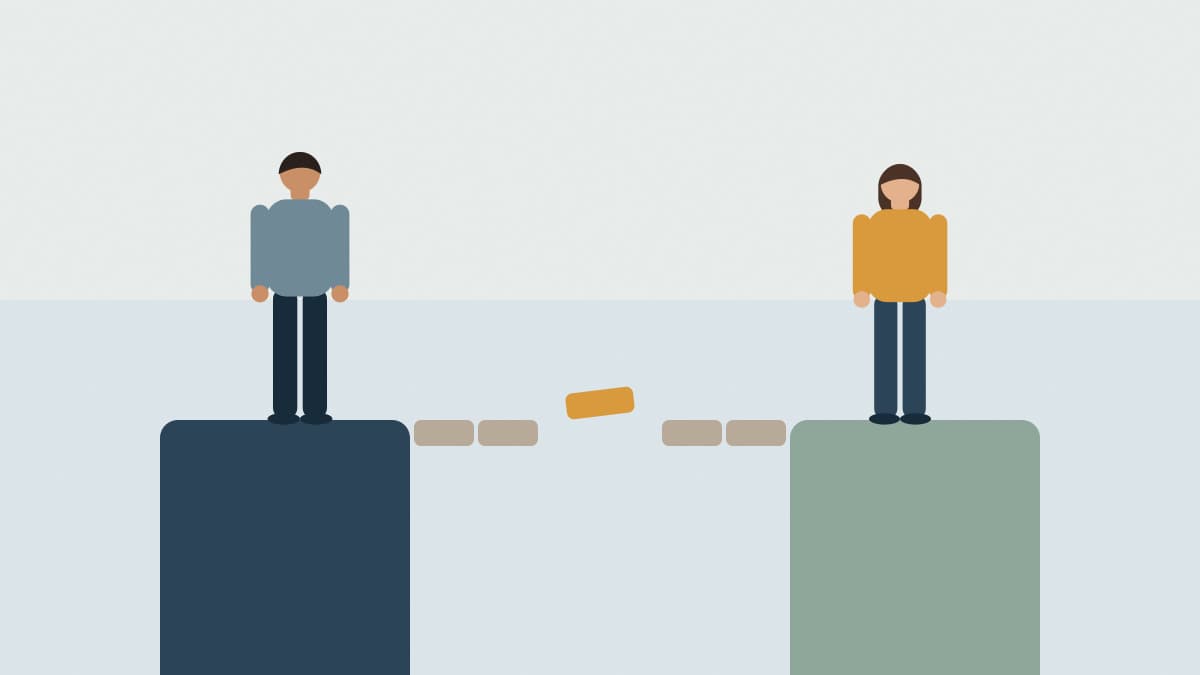
Most couples arrive with a list of incidents — the comment at the dinner, the forgotten commitment, the message that was not answered. Those matter, but they are rarely the actual problem. The problem is usually the loop: one partner pursues, the other withdraws; the pursuing intensifies, the withdrawing deepens. Both people are responding reasonably to what the other is doing, and the loop tightens anyway.
Naming that loop out loud, in the room, changes the conversation. It stops being your character against mine and becomes something the two of you are caught in together. That shift is often the first real relief a couple feels.
How sessions are structured so no one is ambushed
Both partners speak in every session, and I keep that balance actively. A session where one person presents evidence and the other defends themselves is not therapy; it is a hearing, and it makes things worse. If the conversation starts heading there, I will interrupt it.
I may occasionally meet each partner individually to understand their perspective more fully. When I do, I am clear in advance about what stays private and what does not — I do not hold secrets that undermine the joint work.
What I will not do is deliver a verdict on who is right. That is not a therapist's job, and couples who are given one rarely do well afterwards.
Pre-marital counselling: the conversations worth having early
A growing number of couples in India come before marriage rather than in crisis, and it is some of the most useful work I do. The topics are unglamorous and decisive: money and who controls it, expectations of each set of parents, where you will live, whether and when to have children, how much independence each of you needs, what happens when careers pull in different directions.
Couples usually assume they agree on these because they have never tested the assumption in detail. Doing it in a structured setting, before the stakes are live, is considerably easier than discovering the mismatch three years in.
Families, in-laws, and the pressure around a couple
In many Indian households a marriage is not experienced as involving two people. Parents, siblings, and extended family hold real and often legitimate stakes, and a couple can end up managing a negotiation on several fronts at once — while being told that needing help is itself a failure.
This gets addressed directly rather than treated as background noise. The practical work is usually about boundaries: what the two of you decide privately, what gets communicated outward, and how you present a united position without declaring war on anyone.
Who this is for
- You and your partner repeat the same conflict without ever resolving it.
- You want healthier communication, restored trust, and genuine connection.
- You are entering marriage and want to talk properly before, not after.
- You are deciding whether to continue, and want to make that choice clearly.
What you can gain
- Conversations that go somewhere instead of escalating.
- A clear understanding of each other's triggers and underlying needs.
- Repair skills for after a fight, which matter more than never fighting.
- A concrete plan you both agreed to, rather than one person's terms.
What this service includes
Before you book
- Fees
- From ₹499 per 60-minute online session. The exact fee is confirmed before your session.
- When
- Monday–Saturday, 10:00 AM – 7:00 PM IST. Online, from anywhere in India or abroad.
- Languages
- Sessions in English, Hindi, Gujarati, Marathi. Counselling in Hindi, Marathi and Gujarati.
- After you book
- You get an acknowledgement straight away; your request becomes an appointment once it is accepted, and you get a confirmation email then. You join from your client portal. You can change or cancel online up to 2 hours before a session. How online sessions work.
Counselling is not an emergency service. If you are in crisis or thinking about ending your life, contact Tele-MANAS on 14416 (free, 24x7, in multiple languages) or go to your nearest hospital emergency department.
Common questions
What if my partner will not come to counselling?
Start on your own. Individual therapy focused on a relationship is genuinely useful — you can only change your half of a pattern, and changing one half reliably changes the loop. Partners quite often join later, once they see it is not an exercise in assigning blame.
Will you take sides?
No. I will name specific behaviour that is damaging the relationship, and either of you may hear that at different times. But my client is the relationship, not one person in it. If you want an ally against your partner, couples counselling is the wrong tool.
Does couples counselling work over video?
Yes, and it removes a practical barrier that stops many Indian couples starting at all — two people with different schedules travelling to the same room at the same time. You can join from the same device or from two locations. Some couples find slight physical distance actually makes hard topics easier to raise.
How many sessions do couples usually need?
Six to eight sessions is a realistic minimum to shift an entrenched pattern. Where trust has been broken, the work generally takes longer — repair after betrayal has its own sequence and cannot be rushed without it failing.
Can counselling help us separate well?
Yes. Not every relationship should continue, and that is a legitimate outcome. Where a separation is the honest answer — particularly with children involved — counselling can help you do it with less damage to everyone.
Related services
Family Therapy
Improve family dynamics, communication, and relationships through collaborative therapy.
Learn moreAnger Management
Learn healthy ways to express and manage anger, improve relationships, and reduce conflict.
Learn moreIndividual Therapy
One-on-one counselling to explore emotions, overcome anxiety, depression, or trauma in a safe space.
Learn more